Program · 19 Jul 2026
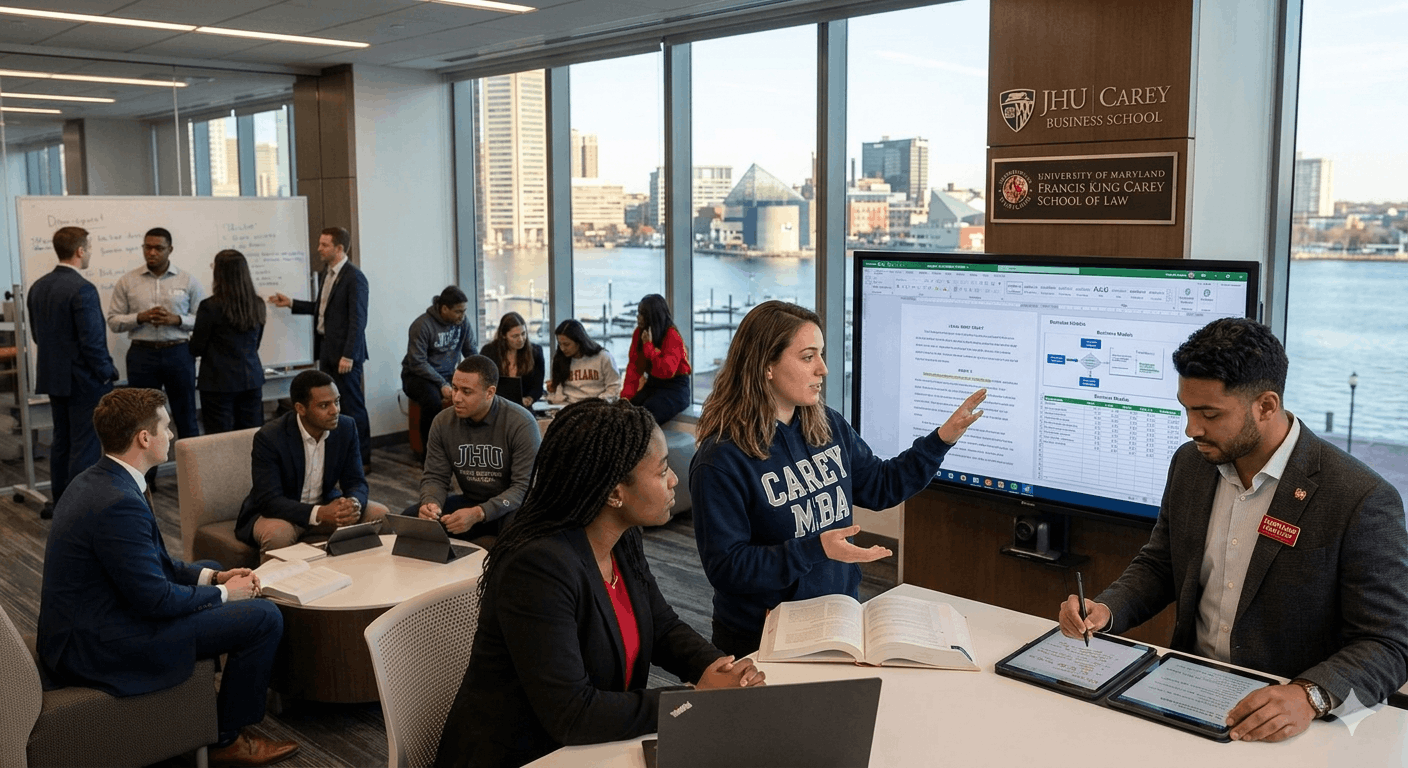
MBA/JD Dual Degree at Johns Hopkins University
The MBA/JD Dual Degree at Johns Hopkins University is designed for students who want to build expertise in both busines...
Read More
Free consultation — no commitment required.
Experienced consultants you can trust to guide you toward leading MBA programs and global career opportunities.

Admission Rate
98%
Across all destinations
Avg. Cost Savings
₹20L*
vs. self-managed admissions
300+
Partner Universities
50+
Destinations Covered
98%
Admission Rate
₹20L*
Avg. Cost Savings
*vs. self-managed admissions
Top schools, highest ROI, and global career access.
Study MBA in USA
Explore leading U.S. cities known for top business schools and strong career outcomes.
Gain real-world skills through programs designed for leadership and career growth.
Program · 19 Jul 2026
The MBA/JD Dual Degree at Johns Hopkins University is designed for students who want to build expertise in both busines...
Read More
Program · 17 Jul 2026
The General MBA at University of West Florida is a flexible postgraduate programme designed for professionals and recen...
Read More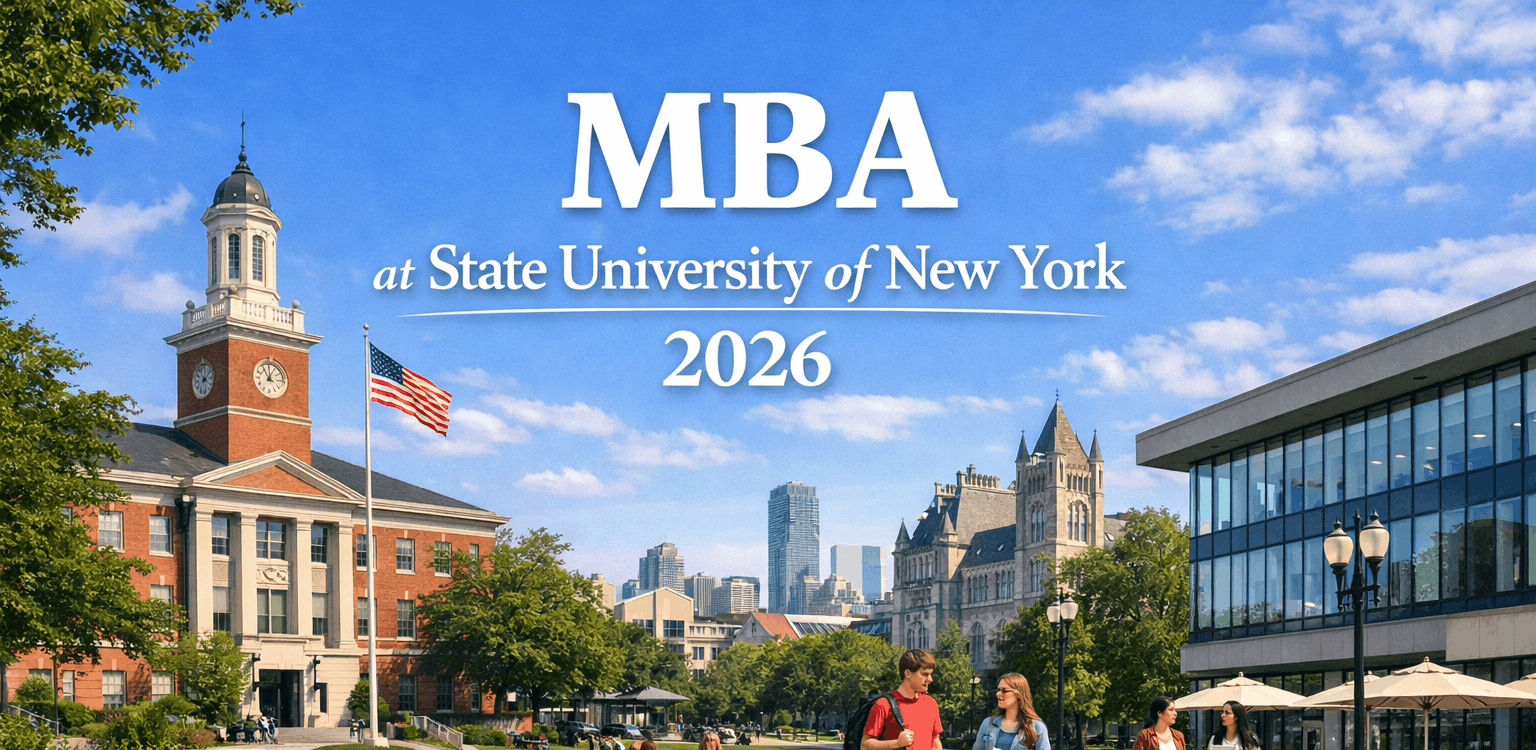
Program · 16 Jul 2026
Earning an MBA at State University of New York (SUNY) provides a highly subsidized alternative to hyper-expensive priva...
Read More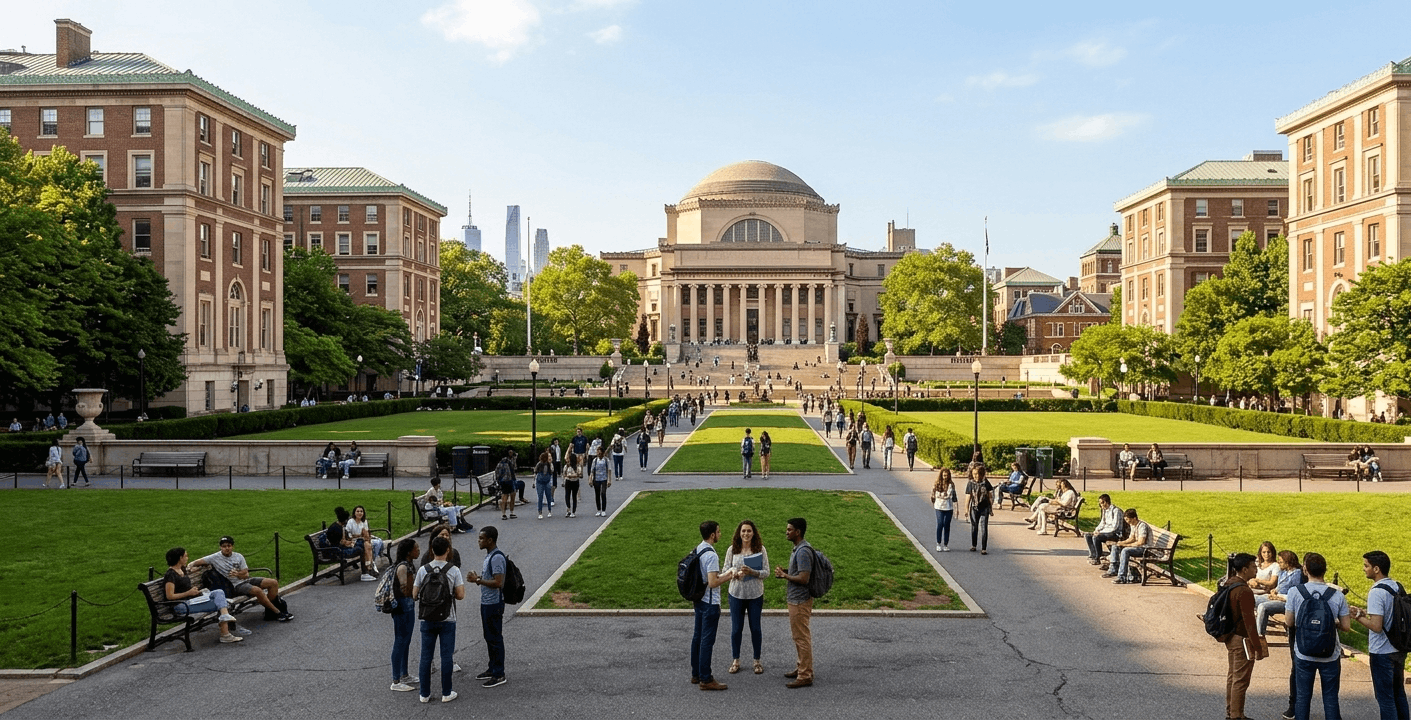
Program · 15 Jul 2026
An MBA at Columbia University is one of the most sought-after business degrees in the world, combining Ivy League acade...
Read More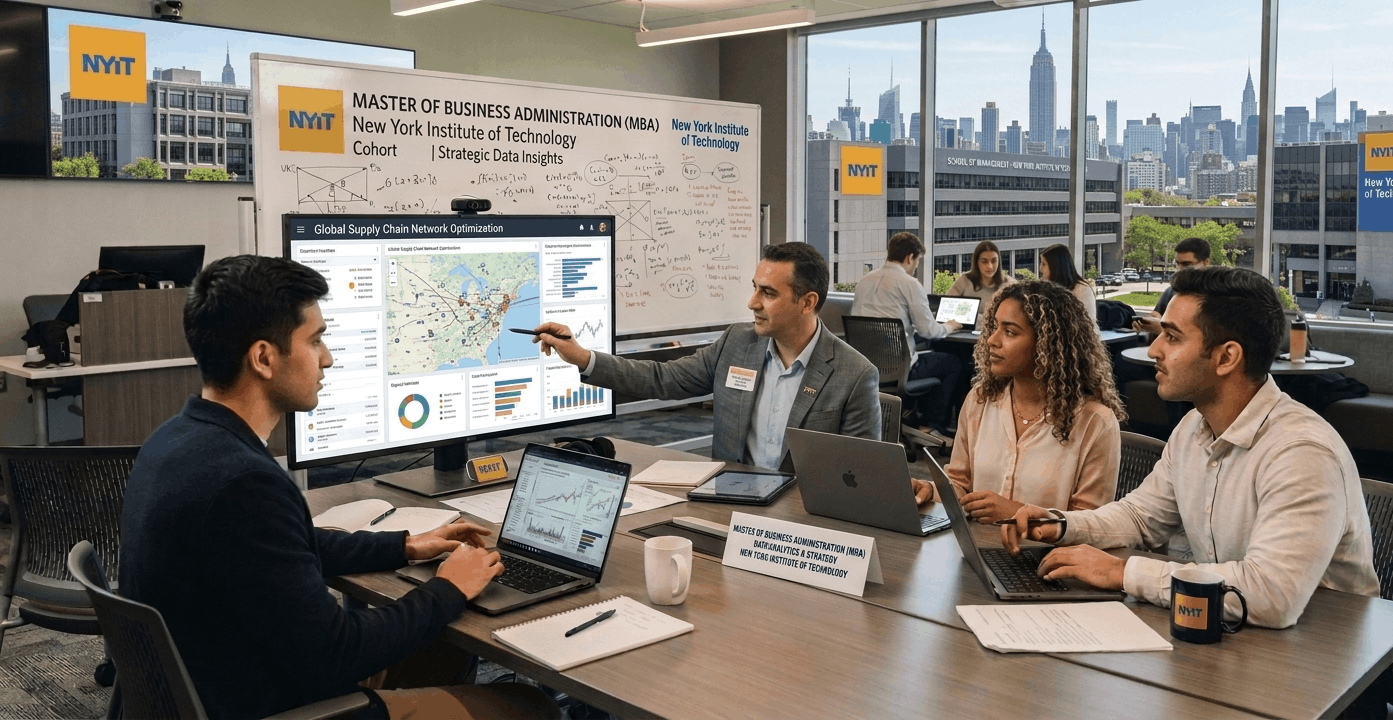
Program · 13 Jul 2026
An MBA at New York Institute of Technology (NYIT) is an 18-to-24 month graduate programme delivered across NYIT's Manha...
Read More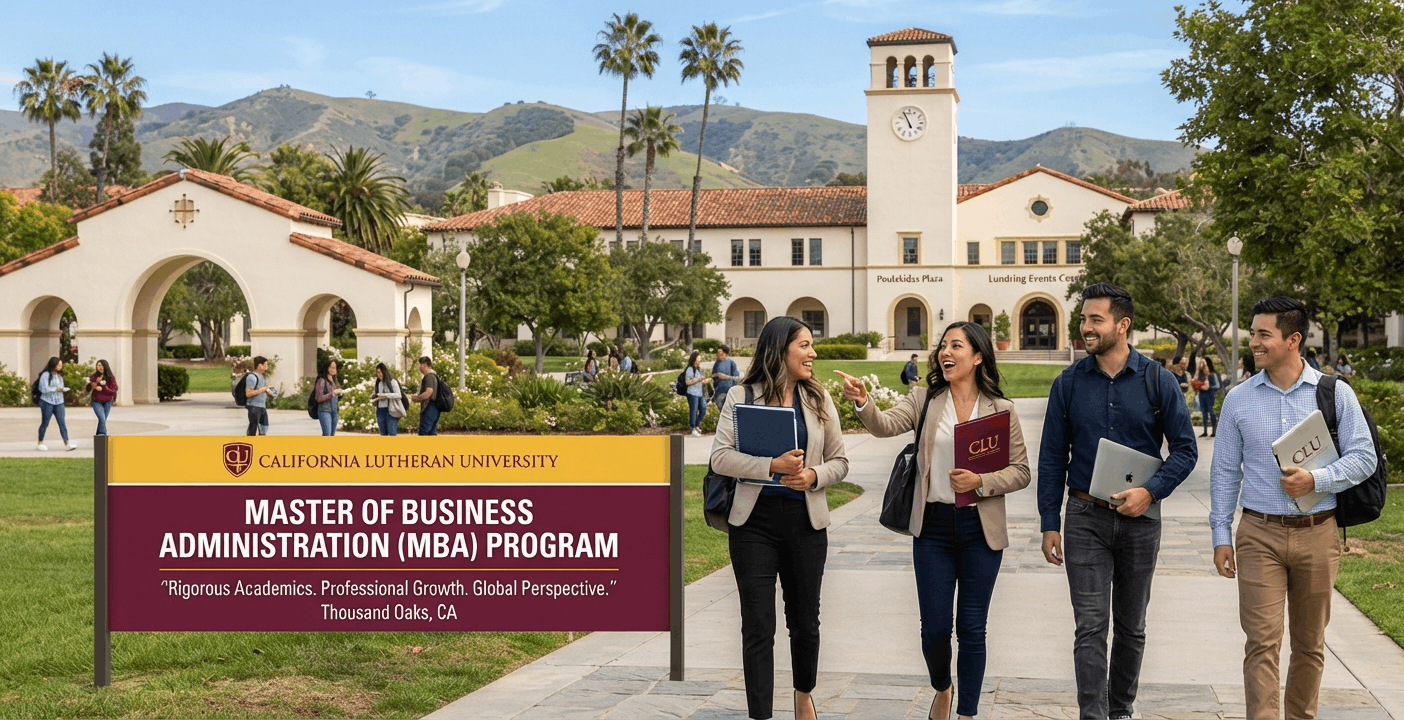
Program · 08 Jul 2026
The Master of Business Administration (MBA) at California Lutheran University is a dynamic program tailored for aspirin...
Read MoreFollow these simple steps to start your study abroad journey
Choose the best universities and programs based on your goals.
Prepare and complete required standardized tests.
Submit your application to selected universities.
Complete visa process and prepare for departure.
Everything you need to know before you begin your study abroad journey
Yes, for many students, an MBA in the USA offers strong long-term value due to high post-MBA salaries, global employer recognition, and leadership roles. Graduates often offset the high tuition through strong placement outcomes, internship-to-job conversions, and long-term career progression.
Admission to top US MBA programs is highly competitive and holistic. Business schools evaluate academic consistency, GMAT/GRE scores, work experience quality, leadership impact, and clarity of goals. Strong professional achievements and compelling essays often matter more than perfect academic records.
Most US MBA programs prefer candidates with professional experience, typically 3–8 years. However, applicants without formal management roles but with strong leadership exposure, entrepreneurial experience, or high-impact technical roles may still be considered, especially at mid-tier or specialised MBA programs.
A STEM-designated MBA includes a stronger focus on analytics, technology, or data-driven management. The key advantage for international students is extended OPT eligibility, allowing up to 36 months of post-study work authorisation, significantly improving job stability and visa sponsorship prospects.
Yes. Internships are a core component of full-time MBA programs in the USA. Most students complete paid summer internships between academic years, which often lead to full-time job offers. Internships also help offset costs and provide US work experience.
GMAT or GRE scores remain important, especially for top-ranked US MBA programs. They help schools assess academic readiness and competitiveness. However, some universities offer test waivers for candidates with strong quantitative backgrounds, advanced degrees, or significant professional experience.
No MBA guarantees employment. However, US business schools offer strong career services, recruiter access, alumni support, and internship pipelines. Students who actively network, perform well academically, and align skills with market demand significantly improve their chances of securing post-MBA roles.
Yes. MBA graduates can work in the USA through Optional Practical Training (OPT) for 12 months. Those completing STEM-designated MBA programs can extend OPT to 36 months, providing more time to gain experience and secure employer-sponsored work visas.
Yes. Many US public universities offer highly respected MBA programs with lower tuition compared to private institutions. These programs provide strong academic training, industry connections, and career outcomes, especially for students seeking value-driven options without compromising educational quality.
Yes. MBA programs in the USA are particularly popular among career switchers. Flexible curricula, internships, experiential learning, and career coaching support transitions into consulting, finance, technology, product management, and leadership roles across multiple industries.
An MBA in the USA enhances global career mobility through international brand recognition, strong alumni networks, and leadership-focused training. Graduates often progress into senior roles across multinational companies, start-ups, or entrepreneurial ventures worldwide, making it a strong long-term career investment.
Quick Overview:
Key Highlights: MBA in USA
| Key Highlights | Details |
|---|---|
| Top MBA Colleges | Chicago Booth, Columbia Business School, NYU Stern, Northwestern Kellogg |
| MBA Colleges with Low Fees | University of West Florida, CUNY Baruch (Zicklin), NYIT |
| Course Duration | 12-24 months, full-time |
| University Ranking | #24 (Chicago), #=43 (Columbia), #58 (NYU), QS World University Rankings 2027 |
| MBA Fees in USA | USD 15,064.50-91,172/year (INR 14.3L-86.8L) |
| MBA Salary in USA | USD 65,943-190,000/year (INR 62.7L-1.81 crore) |
| Post-Study Work Option | OPT (12 months) + STEM OPT (24 months, if applicable) |
| Language of Instruction | English |
An MBA in USA is about more than earning a degree. It places you in one of the world's largest business ecosystems, where startups, Fortune 500 companies, global consulting firms, and multinational banks operate side by side. From classroom discussions to internships and networking events, students gain exposure to real business challenges while building connections that often shape their careers long after graduation.
1. Learn in the World's Largest Business Economy
USA is home to many of the world's biggest companies across technology, finance, healthcare, manufacturing, retail, and consulting. This gives MBA students access to industry projects, internships, networking events, and recruiters from globally recognized organizations.
2. Wide Choice of MBA Programs
Whether you're looking for a one-year accelerated MBA, a traditional two-year program, an Executive MBA, or a STEM-designated MBA, USA offers programs that suit different career stages, budgets, and professional goals.
3. Strong Return on Investment
Although studying in USA requires a significant investment, MBA graduates often benefit from competitive salaries, leadership opportunities, and faster career progression. Many employers actively recruit MBA graduates for management and strategic roles.
4. Practical Learning Beyond the Classroom
MBA programs in USA place strong emphasis on experiential learning through live consulting projects, case studies, internships, business competitions, and collaborations with industry. This practical approach helps students develop leadership and problem-solving skills that employers value.
5. Diverse Classrooms and Global Networks
American business schools bring together students from dozens of countries and professional backgrounds. Studying alongside entrepreneurs, engineers, consultants, healthcare professionals, and managers creates a rich learning environment and helps students build an international professional network.
6. Post-Study Work Opportunities
International graduates can apply for Optional Practical Training (OPT) after completing their degree. Students enrolled in eligible STEM-designated MBA programs may also qualify for an additional 24-month STEM OPT extension, providing more time to gain valuable work experience in USA.
7. A Strong Choice for Indian Students
For Indian students, an MBA in USA offers globally recognized qualifications, access to a large Indian alumni community, and opportunities to work with some of the world's leading employers. Many universities now offer GMAT-optional admissions, making MBA programs accessible to a wider range of applicants.
USA is home to many of the world's highest-ranked universities, offering MBA programs known for academic excellence, global alumni networks, and strong employer connections. These institutions are ideal for students targeting careers in consulting, finance, technology, and entrepreneurship.
Below are the Best MBA Universities in USA:
| University | QS World University Rankings 2027 | Known For |
|---|---|---|
| University of Chicago (Booth) | #24 | Finance, Analytics, flexible MBA curriculum |
| Columbia University (Columbia Business School) | #43 | Finance, Investment Banking, Manhattan location |
| Northwestern University (Kellogg) | #45 | Marketing, Consulting, Leadership |
| New York University (Stern) | #58 | Finance, Technology, Global Business |
| University of Texas at Dallas | #=564 | STEM MBA, Business Analytics, Technology Management |
Not every successful MBA graduate comes from an Ivy League or top-ranked university. Many MBA Colleges in USA offer AACSB-accredited programs with smaller class sizes, lower tuition fees, and strong career outcomes.
These institutions are often a smart choice for students seeking quality education, practical learning, and excellent value without the premium price tag of the country's most elite business schools.
Top MBA Colleges in USA:
| Institution | Known For | Approx. Tuition |
|---|---|---|
| CUNY Baruch College (Zicklin School of Business) | Largest AACSB-accredited business school in USA | USD 59,700 total (₹51.3 lakh) |
| University of West Florida | Online and on-campus AACSB-accredited MBA | USD 15,064.50–49,716 (₹12.9 lakh–₹42.7 lakh) |
| New York Institute of Technology (NYIT) | Project-based learning; Manhattan & Long Island campuses | USD 32,400/year (₹27.8 lakh/year) |
| University of South Florida (Muma College of Business) | Affordable MBA with strong corporate partnerships | USD 21,000–33,000 total (₹18 lakh–₹28.3 lakh) |
| University of Alabama (Manderson Graduate School of Business) | Leadership development and strong ROI | USD 32,000–42,000 total (₹27.5 lakh–₹36 lakh) |
No two MBA programs in USA are exactly alike. Some are built for careers in investment banking and consulting, while others focus on leadership, entrepreneurship, or technology. Looking beyond rankings and understanding what each program does best can help you choose an MBA that fits your long-term career goals.
Below is the list of Best MBA Programs in USA:
Chicago Booth is widely recognized for its flexible curriculum, allowing students to tailor their MBA around finance, analytics, entrepreneurship, and leadership. Instead of following a fixed set of core courses, students can customize their learning experience based on their career ambitions.
| Programme | Official Tuition |
|---|---|
| Full-Time MBA (Class of 2028) | USD 89,976/year (approx. ₹77.3 lakh/year) |
| Total Cost of Attendance (9 months) | USD 132,449/year (approx. ₹1.14 crore/year) |
Located in the heart of New York City, Columbia Business School gives students direct access to one of the world's largest financial and business hubs. The school offers both a traditional 20-month MBA with a summer internship and an accelerated 16-month January intake for experienced professionals.
| Programme | Official Tuition |
|---|---|
| Full-Time MBA – Year 1 | USD 91,172/year (approx. ₹78.3 lakh/year) |
| Total Year 1 Cost of Attendance | USD 137,571/year (approx. ₹1.18 crore/year) |
The University of West Florida offers one of the most affordable AACSB-accredited MBA programs in the country. Students can choose between online and on-campus study while following the same curriculum, making it a practical option for those seeking flexibility and value.
| Programme | Official Tuition |
|---|---|
| Online General MBA (33 credits) | USD 456.50/credit; USD 15,064.50 total (approx. ₹12.9 lakh) |
| On-Campus General MBA – In-State (33 credits) | USD 377.60/credit; approx. USD 12,461 total (approx. ₹10.7 lakh) |
Note: Tuition fees cover the academic program only. Students should also budget for accommodation, health insurance, books, transportation, and other living expenses, which vary by university and location.
Admission requirements across MBA Universities in USA vary sharply by selectivity tier, from Columbia's extremely competitive process to UWF's genuinely accessible, open-admission format for non-business backgrounds.
Academic and Test Score Requirements:
| Institution | Test Score Expectations | Work Experience |
|---|---|---|
| Chicago Booth | Highly competitive; average GMAT around 728-730 | No fixed minimum; typical admits have ~5 years |
| Columbia Business School | Average GMAT around 726-730 | No fixed minimum; most admits have 4-6 years |
| University of West Florida | GMAT/GRE may be requested depending on academic profile | Open to non-business backgrounds; no fixed minimum |
English Language Requirements:
International applicants whose first language isn't English generally need to submit an approved test score, though requirements vary by specific business school.
The application process for an MBA in USA is straightforward, but it requires careful planning. Most universities have multiple admission rounds, and requirements can vary depending on the business school. Starting your application early gives you enough time to prepare test scores, write strong essays, and complete the visa process without unnecessary stress.
| Step | What You Need to Do |
|---|---|
| Step 1: Research MBA Programs | Compare universities based on curriculum, specializations, tuition fees, location, rankings, internships, and career outcomes. Shortlist the programs that best match your goals. |
| Step 2: Check Admission Requirements | Review the eligibility criteria, including academic qualifications, work experience, English language requirements, and whether the university requires a GMAT or GRE score. |
| Step 3: Prepare Standardized Tests | If required, take the GMAT or GRE. You may also need an English proficiency test such as IELTS or TOEFL unless you're eligible for a waiver. |
| Step 4: Prepare Your Application | Gather your academic transcripts, resume, Statement of Purpose (SOP), letters of recommendation, and any additional documents required by the university. |
| Step 5: Submit Your Application | Complete your application through the university's official admissions portal before the deadline for your chosen admission round. |
| Step 6: Attend the MBA Interview | If shortlisted, you'll be invited to an interview. Business schools use this stage to assess your communication skills, leadership potential, and career aspirations. |
| Step 7: Accept the Admission Offer | Once admitted, confirm your place by accepting the offer and paying the required enrollment deposit within the specified deadline. |
| Step 8: Apply for Your Student Visa | After receiving your Form I-20, pay the SEVIS fee, apply for an F-1 Student Visa, and schedule your visa interview before making your travel arrangements. |
Most US business schools follow the standard academic calendar, with Fall as the primary intake offering the widest range of programmes, though several also run additional intakes.
| Intake | Classes Begin | Key Highlights |
|---|---|---|
| Fall Intake (Main) | August/September | The most popular intake, with the widest programme selection, scholarships, and assistantship opportunities |
| Spring Intake | January | Available at select schools, including UWF and Columbia's January MBA track |
MBA Fees in USA vary enormously by tier: elite schools like Chicago Booth and Columbia charge between USD 89,976-91,172 (INR 85.2L-86.8L) annually, while genuinely accessible options like UWF run well under USD 20,000 for the full programme.
| University Tier | Approx. Tuition (USD) | Approx. Tuition (INR) |
|---|---|---|
| Elite (Chicago, Columbia, NYU) | USD 89,524-91,172/year | INR 85.2L-86.8L |
| Mid-Tier (Baruch, NYIT) | USD 32,400-59,700 | INR 30.8L-56.8L |
| Affordable (UWF) | USD 15,064.50-49,716 | INR 14.3L-47.3L |
Living costs vary sharply by city, with New York and San Francisco running considerably higher than Chicago, Boston, or Pensacola.
| City | Estimated Monthly Cost, Excl. Rent (USD) | Estimated Monthly Cost, Excl. Rent (INR) |
|---|---|---|
| New York City | $1,678 | INR 1.60 lakh |
| San Francisco | $1,586 | INR 1.51 lakh |
| Boston | $1,489.20 | INR 1.42 lakh |
| Chicago | $1,276.20 | INR 1.22 lakh |
| Pensacola, FL | $1,065.70 | INR 1.01 lakh |
Source: Numbeo
Note: Taking tuition and living expenses together, the total annual cost of an MBA in USA generally ranges between USD 27,800 and USD 137,571 (approximately INR 26.5L-1.31 crore), depending heavily on the university and city chosen.
Pursuing an MBA in USA can be a significant investment, but many business schools offer scholarships to help reduce tuition costs. Most awards are based on academic achievement, leadership potential, professional experience, or overall application strength. While full-tuition scholarships are highly competitive, partial tuition awards and merit-based fellowships are available at many leading universities.
Top Scholarships for MBA in USA:
| Scholarship | Eligible Institution | Coverage |
|---|---|---|
| Merit-Based Fellowships | Chicago Booth | Partial tuition scholarships awarded at the time of admission based on academic excellence, leadership, and professional achievements. |
| Kellogg Merit-Based Scholarships | Northwestern Kellogg | Approximately 20–25% of MBA students receive scholarships ranging from USD 30,000 (approx. ₹25.8 lakh) to full tuition, with no separate application required. |
| MBA Merit Scholarships | Columbia Business School | Merit-based scholarships awarded to exceptional applicants. Award values vary, with all admitted students automatically considered. |
| Baruch Merit-Based Scholarships | CUNY Baruch (Zicklin School of Business) | Scholarships of up to 50% of tuition for outstanding applicants. Eligible students are automatically considered during the admission process. |
| UWF Merit-Based Scholarships | University of West Florida | Merit scholarships awarded to eligible students, with an average award of approximately USD 8,828 (approx. ₹7.6 lakh) based on recent university data. |
Note: Most MBA scholarships in USA do not require a separate application. Universities automatically evaluate applicants for merit-based awards during the admission process. Submitting a strong academic record, competitive test scores (where required), and a compelling application can improve your chances of receiving financial aid.
To study an MBA in USA full-time, international students need an F-1 Student Visa. The process starts once you have your I-20 from the university's international student office.
Eligibility Criteria:
Financial Requirements:
Students must show funds covering at least the first full year of study, including tuition and living costs, as stated on the I-20. The 28-day rule applies: funds must be clearly visible in your bank account for at least 28 consecutive days before your visa interview date.
| Cost Item | Amount (USD) | Amount (INR, approx.) |
|---|---|---|
| SEVIS I-901 Fee | USD 350 | INR 33,300 |
| DS-160 / MRV Visa Fee | USD 185 | INR 17,600 |
| Proof of Funds (Elite Schools, Year 1) | USD 132,449-137,571 | INR 126.1L-131.0L |
| Proof of Funds (Affordable Schools) | USD 15,064.50-32,400 | INR 14.3L-30.8L |
Documents Required for F-1 Visa:
MBA Salary in USA varies enormously by institution and location, with graduates moving into consulting, investment banking, and technology roles across genuinely distinct regional economies.
Top MBA Salary in USA:
| Role/City | Approx. Annual Salary (USD) | Approx. Annual Salary (INR) |
|---|---|---|
| Management Consultant (Chicago) | USD 65,943-177,885 | INR 62.7L-169.2L |
| Financial Analyst (Chicago) | USD 92,578-158,356 | INR 88.1L-150.7L |
| Business Analyst (NYC) | USD 87,074-144,532 | INR 82.9L-137.6L |
| Marketing Manager (Chicago) | USD 110,989 (average) | INR 105.6L |
| Financial Analyst (Pensacola) | USD 56,103-139,444 | INR 53.4L-132.7L |
| NYU Stern MBA Median Base Salary | USD 175,000 | INR 1.67 crore |
Source: Glassdoor
An MBA in USA remains the global benchmark for business education, but the best programme isn't necessarily the one with the highest tuition fee. While schools like Harvard, Stanford, Wharton, and Chicago Booth offer unmatched access to consulting, finance, and technology recruiters, they also require a significant financial investment.
The bigger question is whether that investment aligns with your career goals.
For Indian students, return on investment depends on factors such as employer connections, alumni network, internship opportunities, OPT eligibility, and post-MBA salary outcomes rather than rankings alone. Many AACSB-accredited universities outside the M7 also deliver strong career prospects at a much lower cost.
Choose your MBA based on the industry and role you want after graduation, then compare schools on total cost, employment outcomes, and long-term earning potential. That's a far better strategy than selecting a university based solely on brand name.
Countries such as Germany, France, Poland, and some public universities in Italy generally offer more affordable MBA options than USA. However, the right choice depends on your career goals, post-study work opportunities, and the reputation of the business school rather than tuition fees alone.
Most universities require a recognized bachelor's degree and proof of English language proficiency. Some programs also expect applicants to have professional work experience, while others welcome recent graduates. Admission decisions are usually based on your academic record, essays, recommendations, and overall profile.
The total cost of an MBA in USA depends on the university, location, and program. Tuition alone can range from around USD 15,064.50-91,172/year (INR 14.3L-86.8L), while living expenses, health insurance, books, and other fees increase the overall budget. It's worth comparing the total cost of attendance rather than tuition alone.
Yes, but full scholarships are highly competitive. Some universities offer full-tuition fellowships to exceptional applicants with outstanding academics, leadership experience, or professional achievements. Most students receive partial scholarships or merit-based financial aid instead of complete funding.
Not always. Many universities have made the GMAT or GRE optional, while others continue to require standardized test scores for admission. Some schools also offer GMAT waivers for applicants with strong academic records or relevant work experience.
Yes. International students on an F-1 visa can work on campus during their studies and may also qualify for internships through Curricular Practical Training (CPT). After graduation, many students gain work experience through Optional Practical Training (OPT), with STEM-designated MBA programs offering extended work authorization.
Specializations such as Finance, Business Analytics, Strategy, Technology Management, and Consulting often lead to some of the highest-paying roles. Your salary will also depend on your previous experience, employer, business school, and location after graduation.
Many leading business schools prefer candidates with two to five years of professional experience because classroom discussions are based on real business situations. However, several universities also offer early-career MBA programs that accept applicants with limited or no work experience.
A full-time MBA in USA usually takes two years to complete, although some universities offer accelerated one-year options. Executive, online, and part-time MBA programs are also available and may take anywhere from 18 months to three years.
Yes. Many international graduates remain in USA through Optional Practical Training (OPT) to gain professional work experience. Those who secure employer sponsorship may later transition to longer-term work visas, depending on immigration regulations and employer requirements.
Instead of focusing only on rankings, compare factors such as tuition fees, class size, internship opportunities, career services, alumni network, return on investment, and graduate employment outcomes. Choosing a program that aligns with your career goals is often more valuable than selecting the highest-ranked business school.
The best MBA schools in USA depend on your career goals, budget, and preferred specialization. Institutions such as Chicago Booth, Columbia Business School, Northwestern Kellogg, Stanford GSB, Harvard Business School, and Wharton are globally recognized for their strong academics, influential alumni networks, and excellent placement records.